

Discovering and applying new and innovative economic development tools, models, policies, and programs
Creating Jobs and Wealth in Distressed Michigan Communities
Evaluating Community AI-Assisted Anchor-Based Connectivity Models for Heath Care Access for Low-Connectivity Rural Populations in Michigan
Summary
This Co-Learning Plan project evaluates whether wireless communication using community anchor-based Low-Power-Wide-Area-Network (LPWAN) models can realistically support intermittent, low-data-rate transmission in under representative rural conditions in Michigan, with the goal of informing planning and investment decisions for low-connectivity communities. Rural Michigan communities face persistent challenges related to limited broadband access in regions where cellular coverage is unreliable or nonexistent. In these settings, limited connectivity constrains the remote delivery of direct care and the ability to connect older adults and agricultural workers to timely support services, increasing reliance on in-person check-ins, and travel-intensive workflows. Using AI-assisted analysis of field-based communication performance, this project will evaluate system feasibility and practical constraints. By providing affordable communication devices to underserved rural areas in Michigan, this project will establish a foundation to improve delivery of direct care services, while creating opportunities for new and expanded employment in healthcare delivery, technical support, and community-based service coordination in rural communities. Through field studies and community engagement, this project will create a pathway for the reliable deployment of affordable care products tailored to the needs of Michiganders.
Author Information
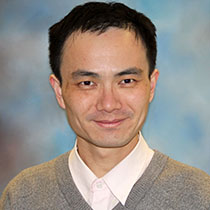 Dr. Chunqi Qian’s major research interest is centered on the development of advanced detection technologies for Magnetic Resonance Imaging and biosensing. The underlying scientific principle is derived from the general concept that weak biological signals can be sensitively observed by a local detector placed at a close enough distance and if the weak signals can be locally amplified to communicate with the external world. Based on such technological foundation, Dr. Qian is also developing multiphysical theranostic methods to study vasculature diseases related to kidney, heart and brain.
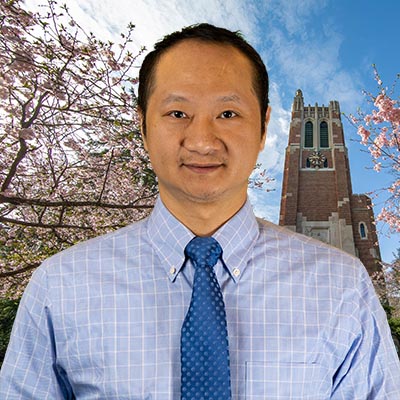 Dr. Sun’s research interests primarily focus on seeking psychosocial and policy interventions to minimize the impact of Alzheimer’s diseases on elders, family caregivers and communities. To date, he has over 80 peer-reviewed articles in the field of gerontology and health. He has received funding from federal (e.g., National Institute of Justice) and state governmental agencies (e.g., Michigan Department of Health and Human Services) as well as from non-profit foundations (e.g., Hartford Foundation). One of Dr. Sun’s current projects is testing an adapted intervention called “Sigh Chi Do Health” to improve dementia literacy and brain health among older adults concerned with memory loss. Dr. Sun is interested in cultural diversity in dementia care by working with various Asian American communities in Michigan and Arizona, and rural and remote communities in Michigan. Through his policy fellowship with the World Health Organizations' Department of Mental Health and Substance Abuse, Dr. Sun assisted with the development of a global toolkit for dementia friendly communities, one of the seven action plans in the WHO Global Public Health Strategy to Dementia. Dr. Sun is the book review co-editor for the Journal of Social Welfare and Sociology and leads their School of Social Work's Gerontological Certificate program.

Electrical Engineering student at Michigan State University, member of the Honors College and a U.S. Army veteran with hands-on experience in RF communications. As a Sniper Team Leader and Lead Communications Specialist, I operated and configured HF, VHF, and UHF radio systems, built antennas, applied radio wave theory and utilized signal propagation modeling to ensure reliable communications in adverse environments. At MSU, I'm building on my operational background through coursework and faculty-mentored research in wireless sensor design.